Choosing the right feed line for maximum performance, lower signal loss, and years of reliable service
When hams upgrade their stations, the focus is usually on buying a better transceiver, installing a larger antenna, or adding a more capable amplifier. One component, however, is frequently overlooked despite having a direct impact on transmit and receive performance: the coaxial cable.
Table of Contents
Your coax cable, often called the feed line, is the critical link between your radio and your antenna. Every signal you transmit—and every signal you receive—travels through it. If the cable introduces excessive loss, poor shielding, or water intrusion, even the best radio and antenna can’t perform to their full potential.
I’ve seen operators spend well over $1,000 on a new HF transceiver, only to connect it with decades-old coax that has become waterlogged or deteriorated. In many cases, replacing the feed line produced a more noticeable improvement than upgrading the radio itself.
The good news is that choosing the right coax doesn’t have to be complicated. There are dozens of cable types on the market, but only a handful are commonly used in amateur radio. Understanding their strengths and limitations makes it much easier to select the best option for your station without overspending.
Whether you’re installing your first HF antenna, building a permanent VHF base station, setting up an SDR receiver, or preparing a portable POTA station, this guide will help you choose the right coax cable for the job.
Quick Answer
Product
Best For
Rating
LMR-400
Best Overall
⭐⭐⭐⭐⭐
RG-8X
Best Budget
⭐⭐⭐⭐⭐
LMR-240
Portable
⭐⭐⭐⭐☆
Bury-FLEX
Premium
⭐⭐⭐⭐⭐
LMR-600
Long Runs
⭐⭐⭐⭐⭐
Cable Assemblies Now LMR-400 Times Microwave Low Loss Coaxial Cable…
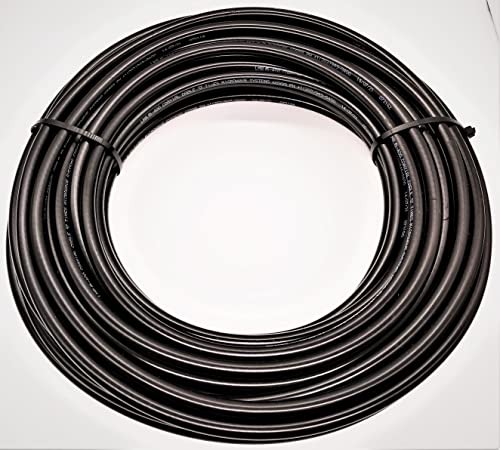
If you’re looking for the best all-around coax cable for amateur radio, Times Microwave LMR-400 is my top recommendation. It offers an excellent balance of low signal loss, durability, weather resistance, and long-term value, making it suitable for most permanent HF, VHF, and UHF installations.
For operators on a tighter budget or those building portable stations, a quality RG-8X remains an excellent choice, particularly for shorter HF feed lines where signal loss is less critical.
My Top Picks
Category
Recommendation
Best For
Best Overall
Times Microwave LMR-400
Most home stations
Best Budget
Quality RG-8X
HF operators and beginners
Best Portable
Times Microwave LMR-240
POTA, SOTA, Field Day
Best Premium
Davis RF Bury-FLEX
High-performance base stations
Best Long Feed Lines
Times Microwave LMR-600
Long VHF/UHF cable runs
Why Your Choice of Coax Cable Matters
Many new amateur radio operators assume coax is simply a wire that carries RF energy from the transmitter to the antenna. While that’s technically true, coaxial cable behaves much more like a component than a piece of wire.
Every coax cable has electrical characteristics that determine how efficiently it transfers RF energy. As signals travel through the cable, a small amount of power is converted into heat. This is known as attenuation, or signal loss.
The amount of loss depends on several factors:
Cable construction
Shielding quality
Conductor size
Frequency
Cable length
Overall manufacturing quality
One of the biggest surprises for new hams is how dramatically signal loss increases with frequency. A coax cable that performs perfectly well on the 80-meter band may introduce significant losses on 70 centimeters.
That’s why VHF, UHF, satellite, and microwave operators often invest in premium low-loss coax. At higher frequencies, every decibel matters.
Receive performance is equally important. Weak DX stations, distant repeaters, weather satellites, and digital signals can all become harder to copy if unnecessary signal loss occurs between the antenna and receiver.
Calculate Your Coax Cable Loss
How much RF power is being lost between your radio and antenna? Use our Coax Cable Loss Calculator to estimate attenuation based on cable type, frequency, and cable length—and see how much power actually reaches your antenna.
Not every station has the same requirements. The ideal feed line for a portable HF setup may be completely different from the best choice for a permanently installed VHF antenna mounted 80 feet above the ground.
When evaluating coax cable, I consider several important characteristics.
Low Signal Loss
The primary purpose of premium coax is to minimize attenuation.
Imagine transmitting 100 watts into your feed line. If your coax introduces significant loss, only a fraction of that power actually reaches the antenna. The remainder is dissipated as heat inside the cable.
On receive, the opposite occurs. Weak signals arriving from your antenna are reduced before they ever reach your receiver.
Lower attenuation means:
Stronger transmitted signals
Better receive sensitivity
Improved weak-signal performance
Greater overall station efficiency
Excellent Shielding
Modern homes are filled with electronic devices capable of generating radio frequency interference (RFI). Wi-Fi routers, switching power supplies, LED lighting, televisions, solar inverters, and computers all contribute to background noise.
High-quality coax uses better shielding to reduce unwanted RF pickup while also minimizing signal leakage during transmission.
Better shielding becomes especially important for:
SDR receivers
Weak-signal VHF work
Digital modes
Urban operating environments
Weather Resistance
Outdoor installations must survive years of exposure to:
Rain
Snow
Ice
UV radiation
Temperature extremes
Wind
Cheap coax often cracks, absorbs moisture, or deteriorates after prolonged sun exposure.
Water intrusion is particularly damaging. Once moisture enters the cable, attenuation increases dramatically, and the cable usually requires replacement.
Mechanical Flexibility
Some premium cables achieve exceptionally low signal loss by using larger conductors and thicker dielectric materials. While this improves electrical performance, it also makes the cable stiffer and more difficult to route.
Portable operators often prefer a slightly higher-loss cable that’s easier to coil, transport, and deploy.
Permanent installations, on the other hand, can benefit from larger, heavier coax that will remain in place for many years.
Connector Compatibility
Your coax is only as good as the connectors installed on each end.
A properly installed PL-259 or N-type connector introduces minimal additional loss and provides years of reliable operation. Poorly installed connectors, however, can create intermittent problems that are difficult to diagnose.
For this reason, I always recommend purchasing quality connectors designed specifically for the cable you’re using rather than trying to make generic connectors fit.
Understanding Coax Cable Specifications
Shopping for coax cable can be confusing because manufacturers often highlight technical specifications without explaining what they actually mean. Terms like attenuation, impedance, velocity factor, shielding percentage, and dielectric material are important, but not every specification has the same impact on your station.
Fortunately, you don’t need an engineering degree to choose the right cable. Once you understand a few key concepts, comparing different coax types becomes much easier.
Impedance: Why Amateur Radio Uses 50-Ohm Coax
Nearly all amateur radio equipment is designed around a 50-ohm impedance. Your transceiver, antenna tuner, SWR meter, amplifier, and most antennas expect to operate with 50-ohm feed line.
Using 75-ohm cable, such as the RG-6 commonly installed for satellite TV and cable television, generally isn’t recommended for transmitting. Although many SDR enthusiasts successfully use RG-6 for receive-only applications because it’s inexpensive and readily available, it creates an impedance mismatch in a transmitting system.
For that reason, every coax cable recommended in this guide is a true 50-ohm coax.
Signal Loss (Attenuation)
Attenuation is the specification that deserves the most attention because it directly affects station performance.
Every coax cable loses some RF energy as the signal travels through it. This loss is measured in decibels (dB) per 100 feet (or per 100 meters).
Lower numbers are always better.
As attenuation increases:
Less transmitter power reaches the antenna.
Weak received signals become even weaker.
Overall station efficiency decreases.
The difference can be dramatic.
Imagine transmitting 100 watts into a feed line. Depending on the cable and operating frequency, your antenna may receive nearly the full 100 watts—or significantly less.
The longer the cable run, the greater the loss becomes.
Coax Loss Table
Cable
HF
2 Meters
70 cm
RG-8X
Good
Fair
Poor
LMR-240
Very Good
Good
Fair
LMR-400
Excellent
Excellent
Very Good
Bury-FLEX
Excellent
Excellent
Very Good
LMR-600
Excellent
Outstanding
Outstanding
Frequency Makes a Huge Difference
One of the most common mistakes new operators make is assuming that all coax performs the same regardless of the band they’re using.
It doesn’t.
Signal loss increases as frequency rises.
For example, a cable that performs very well on the 80-meter band may become noticeably inefficient on 70 centimeters. That’s why VHF and UHF operators often spend more on premium low-loss coax than HF operators with similar station layouts.
If your station primarily operates:
HF (160–10 meters): Moderate-loss coax is often acceptable for shorter runs.
6 meters and 2 meters: Low-loss cable becomes increasingly beneficial.
70 centimeters and above: Premium coax is usually worth the investment, especially for long feed lines.
Cable Length Matters
Even the best coax cable can’t eliminate loss entirely.
A 25-foot feed line has much lower attenuation than a 100-foot run of the same cable. That’s why experienced operators try to install radios as close to the antenna feed point as practical while still maintaining a convenient operating position.
There’s no reason to install extra cable simply because you purchased a 100-foot roll.
Use the length you need, plus enough slack for proper routing and future maintenance.
Shielding
The outer shield performs two important jobs.
First, it keeps your transmitted RF energy inside the cable where it belongs.
Second, it helps prevent outside electrical noise from entering the feed line.
Higher-quality coax typically uses:
Dense copper braid
Multiple shield layers
Aluminum foil shielding
Combination braid-and-foil construction
Better shielding reduces unwanted RF interference and generally improves durability.
This becomes particularly important for:
SDR receivers
Weak-signal work
Digital modes
Urban operating environments with significant electrical noise
Solid vs. Stranded Center Conductors
The center conductor carries the RF signal and can be either solid copper or stranded copper.
Solid conductors generally provide slightly lower loss and greater mechanical strength, making them ideal for permanent installations.
Stranded conductors offer much greater flexibility, making them easier to coil, transport, and route through portable stations.
If you’re building a home station that will remain installed for years, either option can work well. For portable operating, I usually prefer stranded cable because it withstands repeated bending much better.
Jacket Material
The outer jacket protects the cable from mechanical damage and environmental exposure.
PVC jackets are common and work well for most installations, but prolonged exposure to sunlight eventually causes many lower-quality jackets to harden and crack.
Premium coax often includes UV-resistant polyethylene jackets that provide significantly longer outdoor service life.
If your cable will be permanently exposed to the weather, this is a feature worth paying for.
Don’t Chase Tiny Performance Differences
It’s easy to become obsessed with attenuation charts and decimal-point comparisons between cables.
In reality, the difference between two high-quality cables may amount to only a fraction of a decibel over a typical amateur radio installation.
For most stations, good installation practices are more important than chasing the absolute lowest attenuation number.
A properly installed quality RG-8X with weatherproof connectors will outperform premium LMR-400 that has poorly installed connectors or moisture contamination.
Choose a cable appropriate for your operating frequencies, install quality connectors correctly, weatherproof all outdoor connections, and you’ll enjoy years of reliable performance.
Coax Cable Comparison at a Glance
Before diving into the individual recommendations, here’s a quick comparison of the five coax cables I recommend most often.
Coax Cable
Best For
Flexibility
Signal Loss
Relative Cost
LMR-400
Permanent HF/VHF/UHF installations
Moderate
Excellent
$$$
RG-8X
Budget HF stations and beginners
Excellent
Good
$
LMR-240
Portable and lightweight installations
Very Good
Very Good
$$
Davis RF Bury-FLEX
Premium base stations
Excellent
Excellent
$$$$
LMR-600
Very long VHF/UHF feed lines
Fair
Outstanding
$$$$$
The 5 Best Coax Cables for Ham Radio
After using various coax cables over the years and seeing what experienced amateur radio operators consistently recommend, I’ve narrowed my list to five cables that cover almost every station configuration. Rather than recommending dozens of nearly identical products, these represent the best choices for the majority of hams.
1. Times Microwave LMR-400 — Best Overall
Rating:
Best for: Permanent home stations, HF, VHF, UHF, and general-purpose use.
If someone asks me to recommend one coax cable without any additional information, my answer is almost always LMR-400.
It’s become the benchmark for amateur radio because it offers an outstanding balance between low signal loss, durability, weather resistance, and reasonable cost. Whether you’re running a 100-watt HF station or a VHF/UHF base station with a rooftop antenna, LMR-400 is difficult to beat.
One of its biggest advantages is exceptionally low attenuation compared to traditional RG-series cables. On VHF and UHF, where feed line loss becomes increasingly important, LMR-400 can deliver noticeably better performance than older coax designs.
The cable’s double-shield construction also provides excellent protection against RF interference while minimizing signal leakage.
The downside is flexibility. LMR-400 is noticeably stiffer than RG-8X or LMR-240, making tight bends and portable operation less convenient. It’s designed primarily for installations that will remain in place for years rather than being repeatedly coiled and uncoiled.
Pros
Excellent low-loss performance
Suitable for HF through UHF
Outstanding weather resistance
Widely available
Excellent long-term value
Cons
Stiffer than smaller cables
More expensive than RG-8X
Requires connectors designed specifically for LMR-400
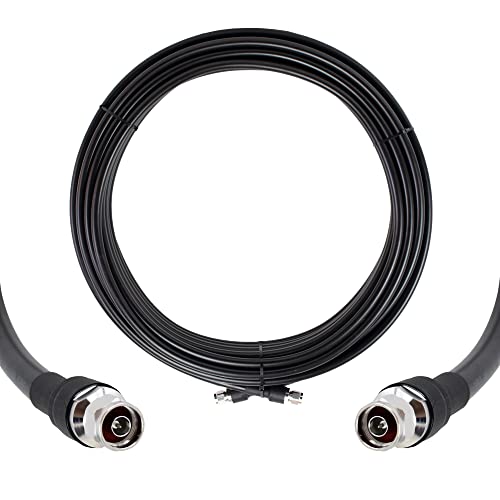
Genuine U.S.A Times Microwave(TM) Cable Providing The Best Signal in RF Coaxial Cables since…
Triple wall 3:1 adhesive heat-shrink on each connection for extra durability. We guarantee that any…
Our cables are made to provide you with a constant data transfer rate without any problem. If the…
Satisfaction Guaranteed: We are providing you with a 1-year limited warranty and 30 Day Replacement…
Bottom Line
If you’re installing a permanent antenna and want one cable that will serve you well for many years, LMR-400 is the easiest recommendation to make.
2. RG-8X — Best Budget Choice
Rating:
Best for: Beginners, HF stations, portable operators, and shorter feed lines.
Not every amateur radio station needs premium low-loss coax.
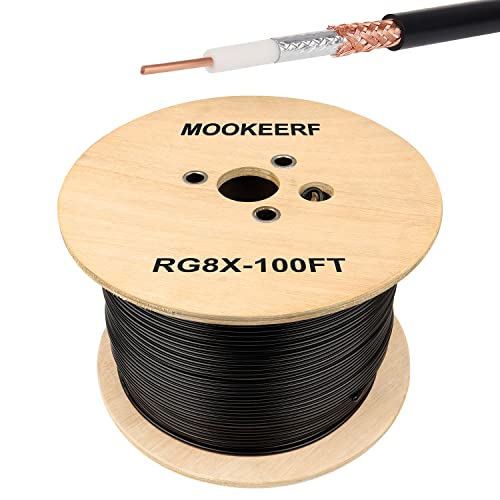
For many HF operators, especially those with feed lines under 50 feet, a quality RG-8X offers excellent performance at a fraction of the price of premium cables.
RG-8X has been popular for decades because it’s lightweight, flexible, easy to install, and inexpensive. It routes easily around corners, coils neatly for storage, and places less strain on connectors than heavier cables.
While its attenuation is higher than LMR-400—particularly on VHF and UHF—that difference often isn’t significant for typical HF installations.
The key is purchasing quality RG-8X from a reputable manufacturer. Cheap no-name cable frequently uses inferior shielding and lower-quality materials that don’t hold up well outdoors.
For a first home station, Field Day setup, or POTA kit, RG-8X remains one of the smartest purchases you can make.
✔Low loss Low SWR — This rg8x coaxial cable is a step up from standard RG-58 coaxial cable and is…
✔Well Built Construction — The outer material of this 100ft rg8x coax cable is made of waterproof…
✔Compatibility — This rg 8x cable works for any 50 Ohm RF system,including cell phone signal…
✔Package Includes — 1x RG8x coaxial cable 100 feet.(Please Note : The cable actually received…
✔Professional Produce — MOOKEERF is a professional manufacturer of RF cable,all our cables are…
Bottom Line
If your budget is limited, don’t feel pressured to buy premium coax. A good-quality RG-8X is capable of excellent performance on most HF stations.
3. Times Microwave LMR-240 — Best for Portable Operations
Rating:
Best for: POTA, SOTA, emergency communications, and lightweight base stations.
LMR-240 fills the gap between RG-8X and LMR-400.
It offers noticeably lower attenuation than RG-8X while remaining much easier to handle than LMR-400. For operators who regularly deploy portable antennas, that’s an attractive combination.
I’ve always liked cables that don’t fight you during setup. LMR-240 bends more naturally, packs easily into a go-kit, and doesn’t place excessive stress on lightweight masts or portable antennas.
It’s also an excellent choice for SDR installations where cable runs aren’t especially long but minimizing signal loss is still desirable.
If you’re building a portable station you’ll deploy dozens of times each year, LMR-240 deserves serious consideration.
Pros
Lower loss than RG-8X
More flexible than LMR-400
Lightweight
Excellent build quality
Well suited to portable stations
Cons
More expensive than RG-8X
Doesn’t match the performance of LMR-400 on very long runs
LMR-240 strikes an excellent balance between portability and performance, making it my favorite choice for portable amateur radio operations.
4. Davis RF Bury-FLEX — Best Premium Choice
Rating:
Best for: High-performance base stations and direct-burial installations.
If you’re building the station you’ve always wanted and don’t mind spending a little more on the feed line, Davis RF Bury-FLEX is one of the finest coax cables available.
Unlike many premium cables that sacrifice flexibility for lower loss, Bury-FLEX manages to deliver both excellent electrical performance and remarkable handling characteristics.
As its name suggests, it’s also suitable for direct burial, eliminating the need for conduit in many installations. Its rugged outer jacket is designed to withstand years of outdoor exposure while resisting moisture intrusion.
Many experienced DXers and contest operators consider Bury-FLEX one of the best long-term investments they can make in their stations.
Pros
Outstanding electrical performance
Extremely flexible
Direct-burial rated
Excellent weather resistance
Built for decades of service
Cons
Premium price
Harder to find than LMR-400
Bottom Line
If you’re installing a permanent station and want premium feed line that should last for many years, Bury-FLEX is an outstanding investment.
5. Times Microwave LMR-600 — Best for Long Feed Lines
Rating:
Best for: Tall towers, repeater sites, long VHF/UHF runs, and weak-signal work.
LMR-600 isn’t necessary for the average backyard station.
Its larger diameter, higher cost, and reduced flexibility make it excessive for many installations. However, once feed line lengths exceed 100 feet—particularly on VHF and UHF—the advantages become much more apparent.
Every decibel saved in the feed line is another decibel reaching the antenna.
For satellite work, EME, weak-signal VHF, repeaters, and commercial-style installations, LMR-600 significantly reduces attenuation compared to smaller cables.
The trade-off is size. This is a substantial cable that requires careful routing and sturdy support.
IDEAL AS A LOW LOSS ANTENNA CABLE: Designed for reduced signal degradation, this Low Loss Antenna…
UNPARALLELED BOLTON TECHNICAL SUPPORT: Every Coaxial Cable includes lifetime technical support, a…
Bottom Line
Unless you have unusually long feed lines or operate extensively on VHF and UHF, LMR-400 is usually sufficient. But when minimizing every possible dB of loss is the goal, LMR-600 is one of the best choices available.
Which Coax Cable Should You Buy?
If you’re still unsure, here’s my advice based on the type of station you’re building:
If you…
Buy…
Want one cable that does almost everything well
LMR-400
Are building your first HF station
RG-8X
Operate POTA, SOTA, or Field Day
LMR-240
Want the best permanent installation
Davis RF Bury-FLEX
Have very long VHF/UHF feed lines
LMR-600
For most amateur radio operators, the decision really comes down to two cables: RG-8X if cost and flexibility are your priorities, or LMR-400 if you’re building a permanent station and want the best overall performance. Those two cables cover the needs of the vast majority of hams, while the remaining three recommendations address more specialized operating scenarios.
Rick Blythe [VE3CNU] is a licensed amateur radio operator and founder of Radio-Hobbyist, with decades of experience, sharing expert guidance on SDR, ham radio, shortwave, scanners, and antennas. At Radio-Hobbyist, we combine practical radio experience with technical research and carefully developed guides to help readers understand radio technology, choose equipment, and get more from their hobby.