

Buying an HF transceiver has never been more challenging. The good news is that there are more capable radios on the market than ever before. The bad news is that every manufacturer claims to offer the best receiver, the best DSP, the best waterfall display, or the best value. After reading a dozen sales pages, it’s easy to come away more confused than when you started.
I wrote this guide to simplify that decision. Rather than listing every HF radio I could find, I focused on a small group of transceivers that I believe represent the best choices currently available through Amazon. Whether you’re buying your first HF station, upgrading from an older rig, or looking for a portable radio for Parks on the Air (POTA), my goal is to explain the strengths and weaknesses of each model so you can spend your money wisely.
One thing is important to understand before we begin. This is not a list of the best HF radios ever made. There are outstanding transceivers from manufacturers such as Elecraft, FlexRadio, Apache Labs, and others that are sold primarily through amateur radio dealers rather than Amazon. Those radios deserve consideration, but they fall outside the scope of this guide.
Editorial Note: Every transceiver in this guide is currently available for purchase through Amazon.com at the time of writing. I intentionally limited the recommendations to Amazon-available products so readers can compare radios that are readily available from a single marketplace. If a technically excellent radio isn’t included, it is usually because it is not sold through Amazon.
I also want to be transparent about how these recommendations were developed. I have not personally owned every radio on this list. My rankings are based on a combination of published technical specifications, manufacturer documentation, independent laboratory testing where available, long-term owner experiences, firmware maturity, and my own experience operating amateur radio equipment over the years. Whenever I express an opinion, I’ll explain the reasoning behind it instead of asking you to simply accept my conclusion.
For this guide, I paid particular attention to factors that have the greatest impact on everyday operating. Receiver performance matters far more to me than flashy marketing claims. A clean receiver with effective DSP, a usable spectrum scope, solid digital mode support, and reliable firmware will make a much bigger difference over years of operating than an extra menu option you’ll never use. I also considered ease of operation, build quality, manufacturer support, and overall value because the best radio isn’t always the most expensive one.
Another decision I made was to focus exclusively on HF transceivers. While a few of the radios discussed also include 6 meters, and one includes VHF and UHF capability, this is not a guide to all-band radios or dual-band mobile equipment. My recommendations are based on HF performance first. If your primary interest is VHF, UHF, repeaters, satellites, or FM operation, I’ll be covering those radios in separate buying guides.
The best HF ham radio for most amateur operators is the Icom IC-7300. It combines excellent receiver performance, direct-sampling SDR technology, a built-in USB sound card, and an intuitive touchscreen at a price that offers outstanding value. Operators focused on weak-signal DX may prefer the Yaesu FT-710 AESS or FTDX10, while portable operators should consider the Xiegu X6200.
Finally, remember that no transceiver operates in isolation. The best HF radio in the world will disappoint if it’s connected to a poor antenna through low-quality feed line. Conversely, a modestly priced transceiver paired with an efficient antenna system often outperforms a far more expensive radio feeding a compromised antenna. As you read through these recommendations, keep your overall station budget in mind. In many cases, investing a little less in the radio and a little more in the antenna system will produce better on-the-air results.
Let’s begin with my quick recommendations before diving into the detailed technical comparisons.
The Best HF Ham Radios at a Glance
If you’re short on time and just want to know which HF transceiver I would buy, these are my top picks. The detailed reviews later in this guide explain exactly why each radio earned its position, but this section should help narrow your search before diving into the technical details.
Best Overall: Icom IC-7300
If I could recommend only one HF transceiver to most amateur radio operators, it would still be the Icom IC-7300 (which I own).
Even though it has been on the market for several years, the IC-7300 remains the benchmark against which many mid-range HF radios are measured. It combines direct-sampling SDR technology, an excellent receiver, an intuitive touch screen, a built-in USB sound card, and a highly usable spectrum scope at a price that continues to represent outstanding value.
It performs equally well for SSB ragchewing, CW, DX chasing, and digital modes like FT8. Unless you have very specialized contesting requirements or are shopping in the $3,000-plus category, I believe the IC-7300 offers the best balance of performance, features, and price available on Amazon.
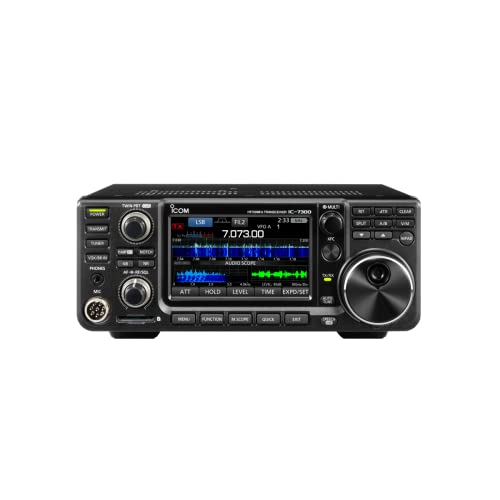
- 100W (25W AM) Output power
- 0.030-74.800 RX frequencies
- Receiver type: Direct sampling
Best for:
- First HF station
- Experienced operators upgrading from older equipment
- Digital mode enthusiasts
- General-purpose operating
Best Beginner HF Radio: Xiegu G90
For newcomers working with a limited budget, I think the Xiegu G90 deserves serious consideration.
Although its maximum output is only 20 watts, the G90 includes features that many entry-level radios simply don’t offer. Its built-in automatic antenna tuner is exceptionally capable, the receiver is surprisingly good for the price, and its compact size makes it ideal for portable operation.
Twenty watts may sound limiting, but countless operators successfully work DX every day using far less power. Paired with an efficient antenna, the G90 is capable of impressive results while costing significantly less than most 100-watt transceivers.

- High Performance SDR – The XIEGU G90 is a portable 20W amateur shortwave transceiver built on an SDR…
- Versatile Mode Options – This device supports SSB, CW, and AM operating modes, Allowing users to…
- High-Definition Display – Featuring a 1.8-inch high-brightness color TFT LCD screen, The XIEGU G…
- User-Friendly Design – The detachable control head design allows for easy positioning of the main…
- Outstanding Support – Ham Club Only provides Xiegu products, With Xiegu professional technicians to…
Best for:
- Budget-conscious beginners
- Portable operators
- POTA activations
- Backup HF station
Best Value: Yaesu FT-710 AESS
If receiver performance is your highest priority, the Yaesu FT-710 AESS is difficult to ignore.
Yaesu borrowed much of the receiver technology from its higher-end FTDX series, producing a radio that offers exceptional sensitivity, outstanding dynamic range, and effective DSP without entering premium pricing territory.
While the user interface takes a little longer to learn than the IC-7300, I believe operators who enjoy chasing weak DX stations will appreciate what the FT-710 brings to the table.
Best for:
- DX enthusiasts
- Serious HF operators
- Home stations
- Operators upgrading from older superheterodyne rigs
Best Premium Choice: Yaesu FTDX10
For operators willing to spend more for receiver performance, the Yaesu FTDX10 is my premium recommendation.
This radio incorporates technology developed for Yaesu’s flagship contest transceivers, including hybrid SDR architecture, roofing filters, excellent DSP, and one of the strongest receivers available in its price class.
If I spent most of my operating time chasing weak DX stations during crowded band conditions, this is the radio I’d be looking at first.
Best for:

- Hybrid SDR Configuration
- 250MHz HRDDS (High Resolution Direct Digital Synthesizer) affords Quiet and Clear Reception
- 3DSS (3-Dimensional Spectrum Stream) on the 5-inch Full-Color TFT Display with Touch-Panel…
- Front Panel Designed for Superior Operating Efficiency
- Remote Operation with optional LAN unit (SCU-LAN10)
- Dedicated DXers
- Contest operators
- Weak-signal enthusiasts
- Long-term home stations
Best Portable HF Radio: Xiegu X6200
Portable operating has exploded in popularity thanks to programs like Parks on the Air and Summits on the Air. The Xiegu X6200 is designed specifically for that style of operation.
With an internal battery, compact size, integrated ATU, SDR receiver, and modern display, it allows you to carry an entire HF station into the field without hauling a heavy power supply or large battery.
It isn’t intended to replace a 100-watt base station, but for hiking, camping, emergency communications, or casual portable operating, it offers an appealing combination of convenience and capability.
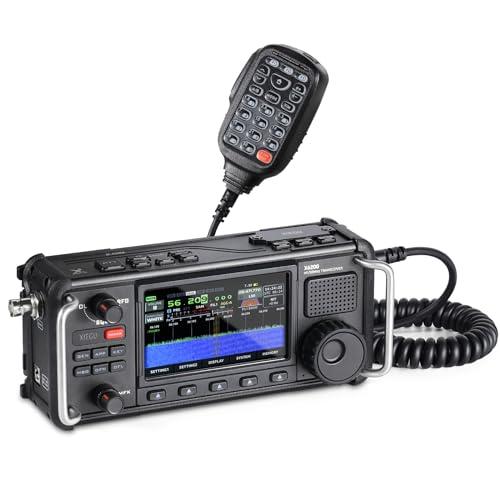
- Precision RF Direct Sampling: Transform your communication with our advanced RF Direct Sampling…
- Versatile Radio Operation: The X6200 supports a wide range of communication modes, including SSB…
- Portable Design: The Xiegu X6200 features a compact frame, a built-in replaceable 3200mAh battery…
- Advanced User Interface: Featuring a 4-inch high-resolution color screen paired with a sensitive…
- Automatic Antenna Tuner: The built-in automatic antenna tuner ensures optimal signal reception and…
Best for:
- POTA
- SOTA
- Camping
- Emergency communications
- Travel
Best All-Band Option: Yaesu FT-991A
Although this guide focuses on HF radios, I would be remiss if I didn’t mention the Yaesu FT-991A.
Unlike the other radios in this guide, it also includes 6 meters, 2 meters, and 70 centimeters. If you want one transceiver capable of operating virtually every amateur band from a single desktop radio, the FT-991A remains one of the best choices available.
I would not recommend buying it because it includes VHF and UHF if your only interest is HF. However, if you know you’ll also be active on local repeaters, satellites, or VHF weak-signal work, it provides exceptional versatility in a single package.
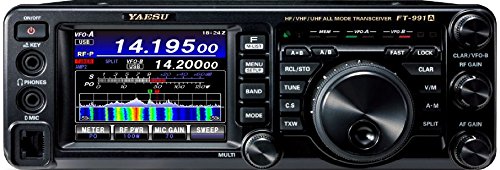
- Dynamic Real-Time Spectrum Scope *NEW!
- Multi-Color Waterfall Display *NEW!
- 160 Meters through 70 Centimeters – SSB/CW/FM/C4FM Digital/AM
- 100 Watts (2 Meter / 70 Centimeter: 50 Watts) of Solid Output Power Performance
- 3.5 inch TFT Full-Color Touch Panel Operation for Superior Operability and Visibility
Best for:
- Operators wanting one radio for every band
- Small ham shacks
- Mobile deployments
- Emergency communications
HF Radio Comparison Table
Radio | HF Bands | 6 m | 100 W Output | SDR Receiver | Internal ATU | USB Audio | Spectrum Scope | Best For |
|---|---|---|---|---|---|---|---|---|
Icom IC-7300 | ✓ | ✓ | ✓ | Direct Sampling | ✓ | ✓ | ✓ | Best Overall |
Yaesu FT-710 AESS | ✓ | ✓ | ✓ | SDR Hybrid | ✓ | ✓ | ✓ | Best Receiver Value |
Yaesu FTDX10 | ✓ | ✓ | ✓ | SDR Hybrid | ✓ | ✓ | ✓ | Premium DX |
Yaesu FT-991A | ✓ | ✓ | ✓ | Hybrid | ✓ | ✓ | ✓ | All-Band Station |
Xiegu G90 | ✓ | ✗ | 20 W | SDR | ✓ | Partial | Basic | Budget Choice |
Xiegu X6200 | ✓ | ✗ | 10 W | SDR | ✓ | ✓ | ✓ | Portable Operation |
Before looking at each radio individually, it’s worth pointing out something that surprised me while researching this guide. Ten years ago, the differences between manufacturers were dramatic. Today, every radio on this list is capable of making worldwide contacts when paired with a good antenna. The real differences lie in receiver quality, operating ergonomics, digital mode integration, and how enjoyable the radio is to use over hundreds of hours behind the microphone or key.
That’s why my rankings don’t simply reward the radio with the longest feature list. I considered the complete operating experience, long-term value, and the kinds of compromises each manufacturer made to reach a particular price point. Those factors become much more important after the excitement of opening the box has worn off.
Icom IC-7300: Best Overall HF Transceiver
For years, every time someone has asked me, “If you could only recommend one HF radio, what would it be?” my answer has usually been the same: the Icom IC-7300.
That’s not because it’s the newest radio or the most expensive. It isn’t. The reason I continue recommending it is much simpler. The IC-7300 gets almost everything right. It offers outstanding receiver performance, an excellent user interface, modern SDR technology, and a feature set that appeals to beginners and experienced operators alike without becoming unnecessarily complicated.
When it was introduced, the IC-7300 fundamentally changed expectations for radios in its price class. Direct-sampling SDR architecture was previously found mostly in much more expensive equipment. By bringing that technology into an affordable 100-watt HF transceiver, Icom raised the bar for the entire industry.
Years later, it remains one of the best values available.
- 100W (25W AM) Output power
- 0.030-74.800 RX frequencies
- Receiver type: Direct sampling
Technical Specifications
Specification | Details |
|---|---|
Frequency Coverage | 160–6 meters |
Transmit Power | 100 W HF/6 m |
Receiver Type | Direct Sampling SDR |
Display | 4.3-inch color touchscreen |
Spectrum Scope | Real-time with waterfall |
Internal Antenna Tuner | Yes |
USB Audio Interface | Yes |
CAT Control | Yes |
CW Decoder | Yes |
Digital Modes | Excellent support |
Weight | Approximately 9 pounds (4.2 kg) |
Power Supply | 13.8 VDC |
What I Like
The receiver is the biggest reason this radio continues to dominate recommendation lists.
Instead of relying on a traditional superheterodyne design with multiple intermediate frequency stages, the IC-7300 digitizes the incoming RF signal very early in the receive chain. That allows much of the filtering and signal processing to occur digitally, producing excellent selectivity and making weak stations easier to separate from adjacent interference.
In practical operation, I find the spectrum scope to be one of the radio’s greatest strengths. Once you’ve operated with a real-time waterfall display, it’s difficult to imagine going back to a radio without one. Rather than tuning blindly across the band, I can immediately see where stations are active, identify pileups, locate weak CW signals, or spot FT8 activity at a glance.
The touchscreen deserves praise as well. I normally approach touchscreens with some skepticism because many manufacturers implement them poorly. Icom got this one right. Common adjustments require only a few taps, menus are logically organized, and the display remains readable under a wide range of lighting conditions.
Digital mode operators will also appreciate the built-in USB sound card. Connecting the IC-7300 to software like WSJT-X or FLDIGI is refreshingly simple compared to older radios that required separate audio interfaces and additional cables. One USB connection handles CAT control and audio, reducing cable clutter and simplifying station setup.
Another strength is firmware support. Icom has continued refining the radio over the years with updates that improved functionality and fixed minor issues. That long-term support gives me confidence that the radio will remain useful well into the future.
Things to Consider
No radio is perfect, and the IC-7300 has a few limitations.
Although its receiver is excellent, it is not the strongest performer under extreme contest conditions. Operators working major DX contests with multiple high-power stations only a few kilohertz away may find radios like the Yaesu FTDX10 or higher-end contest transceivers provide better close-in dynamic range.
The internal antenna tuner is convenient, but it has a relatively limited matching range. It works well for touching up a reasonably resonant antenna, but it is not designed to tune highly mismatched loads. If your antenna presents a high SWR across several bands, an external tuner will usually produce better results.
I also wish the speaker delivered slightly richer audio. Most operators eventually connect an external speaker or wear headphones, so this isn’t a major drawback, but it’s worth mentioning.
Who Should Buy It
I recommend the IC-7300 for:
- First-time HF operators wanting a radio they won’t outgrow.
- Operators upgrading from older analog transceivers.
- FT8 and digital mode enthusiasts.
- General-purpose DXers.
- Casual contesters.
- Home stations where ease of use matters.
In my opinion, this is one of the few radios that successfully balances simplicity and sophistication. A beginner can become productive within a few hours, while an experienced operator will still appreciate its capabilities years later.
Bottom Line
If someone handed me a fixed budget of around $1,200 and asked me to build a capable HF station today, the IC-7300 would still be my first choice. It isn’t the absolute best receiver ever built, nor does it include every premium feature found on flagship contest radios. What it does offer is one of the best combinations of performance, usability, reliability, and value available anywhere in the amateur radio market.
For most operators, I believe it’s the benchmark against which every other mid-priced HF transceiver should be measured.
Yaesu FT-710 AESS: Best Value for Serious HF Operators
When Yaesu introduced the FT-710 AESS, many operators immediately started comparing it with the Icom IC-7300. That’s understandable because both radios occupy a similar price range and target the same audience. After spending considerable time studying the specifications, independent receiver testing, and owner experiences, I don’t think that’s quite the right comparison.
The FT-710 isn’t simply Yaesu’s answer to the IC-7300. In many respects, it’s a scaled-down version of the company’s much more expensive FTDX series. Rather than packing the radio with every feature imaginable, Yaesu focused on receiver performance, signal processing, and audio quality. That approach makes the FT-710 particularly appealing to operators who spend hours chasing weak DX stations or digging signals out of crowded bands.
If receiver performance ranks above flashy features on your priority list, the FT-710 deserves very serious consideration.
Technical Specifications
Specification | Details |
|---|---|
Frequency Coverage | 160–6 meters |
Transmit Power | 100 W HF/6 m |
Receiver Type | Hybrid SDR |
Display | 4.3-inch color display |
Spectrum Scope | Real-time with waterfall |
Internal Antenna Tuner | Yes |
USB Audio Interface | Yes |
CAT Control | Yes |
DSP | 32-bit High-Speed DSP |
Weight | Approximately 9.9 pounds (4.5 kg) |
Power Supply | 13.8 VDC |
What I Like
The receiver is unquestionably the star of the show.
Yaesu incorporated technology derived from its FTDX contest radios, and it shows. The FT-710 handles crowded band conditions exceptionally well, particularly when strong adjacent signals threaten to overwhelm weaker stations. Features like adjustable roofing filters, advanced DSP, and excellent noise reduction give the operator impressive control over difficult operating conditions.
One area where I think Yaesu has traditionally excelled is receive audio. The FT-710 continues that reputation. Voice signals sound natural, fatigue during long operating sessions is reduced, and weak stations often seem easier to copy than raw sensitivity figures alone would suggest.
The included AESS (Acoustic Enhanced Speaker System) deserves mention as well. While external speakers are always an option, the supplied speaker provides noticeably fuller audio than the small internal speakers found with many radios. If you spend several hours listening to crowded bands, good audio quality becomes more important than many newcomers realize.
Digital mode support is also excellent. Like the IC-7300, the FT-710 includes an integrated USB sound interface that simplifies connections to WSJT-X, FLDIGI, JS8Call, and other popular software. One USB cable handles both CAT control and audio, eliminating the need for external sound interfaces.
The spectrum scope is fast, responsive, and easy to interpret. Although I personally give a slight edge to Icom’s overall user interface, Yaesu’s implementation is very capable and provides excellent situational awareness while tuning across the bands.
Things to Consider
The FT-710 isn’t quite as approachable for beginners as the IC-7300.
That’s not because it’s overly complicated, but because Yaesu exposes more operating controls and menu options to the user. Experienced operators will appreciate that flexibility, while newcomers may initially find the interface a little more intimidating.
I also think the menu structure requires a longer learning period. Once familiar with it, most adjustments become second nature, but I found the IC-7300 easier to operate right out of the box.
Another consideration is price. Depending on current promotions, the FT-710 often costs slightly more than the IC-7300. Whether that premium is worthwhile depends largely on how much importance you place on receiver performance. For dedicated DXers, I think the answer is often yes.
Who Should Buy It
I would recommend the FT-710 to:
- DX enthusiasts.
- Operators who enjoy weak-signal work.
- Experienced HF operators upgrading from older radios.
- Operators who spend long sessions listening on crowded bands.
- Anyone who values receiver performance over having the simplest user interface.
If you’re primarily interested in contesting, DX hunting, or operating in difficult RF environments, I think the FT-710 makes a compelling case for itself.
Bottom Line
If the IC-7300 is the best all-around recommendation, the FT-710 may have the stronger receiver for many real-world operating situations. That’s high praise because receiver quality is one of the most important characteristics of any HF transceiver.
For operators who prioritize listening performance above everything else, I believe the FT-710 is one of the best values currently available on Amazon. It borrows enough technology from Yaesu’s higher-end FTDX lineup to deliver premium-level performance without reaching premium-level prices, making it an excellent choice for serious HF operators who want a radio they’ll enjoy using for many years.
Yaesu FT-991A: The Best All-Band Choice
The Yaesu FT-991A occupies an interesting position in the amateur radio market because it tries to be everything to everyone. Unlike the other radios in this guide, it isn’t strictly an HF transceiver. In addition to covering the HF bands and 6 meters, it also includes 2 meters and 70 centimeters in the same compact package.
Normally, I don’t like products that try to do too much because they often end up making compromises. The FT-991A is one of the exceptions.
Although I would not recommend buying it solely for its VHF and UHF capabilities, I think those extra bands become a significant bonus if you already plan to use repeaters, satellites, local nets, or emergency communications. Instead of purchasing multiple radios, you can build an entire amateur radio station around a single transceiver.
That flexibility explains why the FT-991A has remained popular for years.
- Dynamic Real-Time Spectrum Scope *NEW!
- Multi-Color Waterfall Display *NEW!
- 160 Meters through 70 Centimeters – SSB/CW/FM/C4FM Digital/AM
- 100 Watts (2 Meter / 70 Centimeter: 50 Watts) of Solid Output Power Performance
- 3.5 inch TFT Full-Color Touch Panel Operation for Superior Operability and Visibility
Technical Specifications
Specification | Details |
|---|---|
Frequency Coverage | 160–6 meters, 2 m, 70 cm |
Transmit Power | 100 W HF/6 m, 50 W 2 m, 50 W 70 cm |
Receiver Type | Hybrid SDR |
Display | 3.5-inch color touchscreen |
Spectrum Scope | Yes |
Internal Antenna Tuner | Yes (HF/6 m) |
USB Audio Interface | Yes |
CAT Control | Yes |
Modes | SSB, CW, AM, FM, Data, C4FM |
Weight | Approximately 9.7 pounds (4.4 kg) |
Power Supply | 13.8 VDC |
What I Like
Versatility is the FT-991A’s greatest strength.
Instead of dedicating valuable desk space to separate HF, VHF, and UHF radios, the FT-991A combines them into one compact station. For operators with limited room, that can be a significant advantage.
I also appreciate how well Yaesu integrated digital operation. Like the FT-710, the FT-991A includes a built-in USB sound interface, making FT8, JS8Call, RTTY, and other digital modes straightforward to configure. One USB cable handles CAT control and audio without requiring an external interface.
The receiver performs well across the HF bands, and the built-in spectrum scope makes tuning much easier than older analog transceivers. Although the display is smaller than the one on the IC-7300, it still provides enough detail to identify activity across the band and quickly locate stations.
Another advantage is future flexibility. Many new operators begin on HF and later discover interests in satellite communications, VHF weak-signal work, local repeaters, or emergency communications. The FT-991A already includes those capabilities, eliminating the need to purchase another radio later.
Things to Consider
Every all-band radio involves compromise, and the FT-991A is no exception.
If my only interest were HF operating, I would probably choose either the IC-7300 or the FT-710 instead. Both radios devote all of their engineering effort to HF performance rather than spreading features across multiple bands.
The touchscreen is functional but feels somewhat dated compared to newer radios. The menus are logically organized, but the interface doesn’t feel quite as polished or responsive as Icom’s implementation.
The spectrum scope also isn’t as refined as the displays found on some of the newest SDR-based transceivers. It remains very useful, but experienced operators will notice the difference when comparing radios side by side.
Finally, if you never intend to operate above 6 meters, you’re paying for capabilities you may never use.
Who Should Buy It
I recommend the FT-991A for:
- Operators wanting one radio for every amateur band.
- New hams building their first complete station.
- Emergency communications volunteers.
- RV owners and travelers.
- Operators with limited shack space.
It’s particularly attractive if you know you’ll eventually become active on both HF and VHF/UHF.
Bottom Line
The FT-991A isn’t my first recommendation for someone focused exclusively on HF performance, but it is easily my favorite choice for operators who want one transceiver capable of handling almost every aspect of amateur radio.
Its combination of HF, 6 meters, 2 meters, and 70 centimeters makes it one of the most versatile radios available on Amazon today. If versatility matters more to you than squeezing out the last few percentage points of receiver performance, the FT-991A is an excellent long-term investment.
Xiegu G90: The Budget HF Radio That Exceeds Expectations
Budget HF transceivers often force buyers to accept major compromises. Weak receivers, limited filtering, poor ergonomics, or stripped-down feature sets are common at the lower end of the market. The Xiegu G90 surprised many operators because it managed to avoid most of those pitfalls.
At first glance, the specifications don’t seem particularly impressive. The transmitter produces only 20 watts, which is one-fifth the output of a typical 100-watt HF transceiver. Many newcomers immediately dismiss it for that reason alone.
I think that’s a mistake.
Power is only one part of the communication equation. A well-designed antenna system, favorable propagation, and good operating technique frequently matter more than raw transmitter output. Thousands of Parks on the Air operators regularly make impressive contacts with radios producing five to twenty watts.
The G90 proves that lower power doesn’t necessarily mean lower capability.
- Precision RF Direct Sampling: Transform your communication with our advanced RF Direct Sampling…
- Versatile Radio Operation: The X6200 supports a wide range of communication modes, including SSB…
- Portable Design: The Xiegu X6200 features a compact frame, a built-in replaceable 3200mAh battery…
- Advanced User Interface: Featuring a 4-inch high-resolution color screen paired with a sensitive…
- Automatic Antenna Tuner: The built-in automatic antenna tuner ensures optimal signal reception and…
Technical Specifications
Specification | Details |
|---|---|
Frequency Coverage | 160–10 meters |
Transmit Power | 1–20 W |
Receiver Type | SDR |
Display | Color LCD |
Spectrum Scope | Basic |
Internal Antenna Tuner | Yes (Wide Matching Range) |
USB Audio Interface | Requires external interface for full digital integration |
CAT Control | Yes |
Weight | Approximately 4 pounds (1.8 kg) |
Power Supply | 13.8 VDC |
What I Like
The first thing that impresses me about the G90 is its automatic antenna tuner.
Unlike the relatively limited tuners found in many 100-watt radios, the G90’s tuner has earned an excellent reputation for matching antennas over a surprisingly wide range of impedances. While I still believe every antenna should be made as resonant as possible, having a forgiving tuner is a tremendous advantage for portable operators and experimenters.
Receiver performance is also much better than the price suggests. No, it won’t outperform premium contest radios, but it provides clean audio, effective filtering, and a usable spectrum display that make everyday operating enjoyable.
The compact size is another major advantage. Whether I’m activating a park, operating from a campsite, or putting together a portable emergency communications kit, every pound matters. The G90 packs an impressive amount of capability into a relatively small enclosure.
I also appreciate that Xiegu didn’t oversimplify the radio. Even at this price point, operators have access to adjustable filtering, DSP features, CAT control, and enough customization to keep experienced users happy.
The biggest surprise, however, is just how much fun this radio is to operate. It encourages good operating practices because you quickly learn to take advantage of propagation, antenna efficiency, and careful listening instead of simply relying on brute-force transmitter power.
Things to Consider
The biggest limitation of the G90 is obvious: transmit power.
Twenty watts is perfectly usable, but it doesn’t provide the margin that a 100-watt transceiver does. During poor band conditions or when trying to break through a crowded DX pileup, those extra watts can make the difference between completing a contact and remaining unheard.
That doesn’t mean the G90 is a poor performer. It simply means expectations need to be realistic. If your goal is contesting every weekend or consistently working difficult DX under marginal propagation, you’ll probably appreciate the additional power offered by the IC-7300 or FT-710.
Another drawback is digital mode integration. Unlike newer Icom and Yaesu radios, the G90 does not include a built-in USB audio interface. Digital modes such as FT8 are certainly possible, but they require additional hardware or cabling, making the setup process more involved.
The display is functional rather than impressive. The spectrum scope provides useful information, but it lacks the smoothness and detail found on higher-priced SDR radios. That’s understandable given the price point, but it’s one of the compromises buyers should recognize.
Finally, firmware updates have improved the radio over time, but Xiegu’s documentation and software ecosystem aren’t as polished as those from Icom or Yaesu. Experienced operators usually work through those issues without difficulty, while beginners may encounter a steeper learning curve.
Who Should Buy It
I think the G90 is an excellent choice for:
- New HF operators on a limited budget.
- Parks on the Air (POTA) activators.
- Portable operators.
- Emergency communications kits.
- Operators looking for a capable second station.
It’s also a smart purchase for someone who wants to learn HF without immediately investing well over a thousand dollars.
Bottom Line
The Xiegu G90 isn’t trying to compete directly with flagship 100-watt transceivers, and I don’t think it should be judged by that standard. Instead, it delivers an impressive combination of receiver performance, portability, and features at a price that’s difficult to ignore.
If I were recommending a first HF radio to someone with a tight budget, the G90 would be near the top of my list. Pair it with a well-designed antenna, and you’ll discover that thoughtful operating technique often matters more than maximum transmitter power.
Xiegu X6200: My Favorite Portable HF Radio
Portable amateur radio has grown tremendously over the past few years. Programs like Parks on the Air (POTA), Summits on the Air (SOTA), and field operating have encouraged operators to take their stations outside the shack, and manufacturers have responded with radios designed specifically for that style of operating.
The Xiegu X6200 is one of the most interesting examples. I don’t own one yet, but I want one.
Rather than shrinking a traditional base station, Xiegu designed a radio around portability. It combines an SDR receiver, internal battery, automatic antenna tuner, color display, and modern digital features into a compact package that easily fits into a backpack.
I wouldn’t replace my primary home station with an X6200, but that’s not its purpose. This radio is designed for operators who value portability, convenience, and self-contained operation above maximum transmit power.
Technical Specifications
Specification | Details |
|---|---|
Frequency Coverage | 160–6 meters |
Transmit Power | Up to 10 W |
Receiver Type | SDR |
Display | Large color touchscreen |
Spectrum Scope | Real-time waterfall |
Internal Antenna Tuner | Yes |
Internal Battery | Yes |
USB Audio Interface | Yes |
CAT Control | Yes |
Weight | Approximately 2.2 pounds (1 kg) |
Power Supply | Internal battery or external 13.8 VDC |
What I Like
The biggest advantage of the X6200 is convenience.
With many portable radios, I still need to carry an external battery, tuner, cables, and accessories before I’m ready to operate. The X6200 dramatically reduces that burden by integrating most of those components into a single package.
The SDR receiver is surprisingly capable, especially considering the radio’s size. The waterfall display is responsive, tuning is intuitive, and navigating around the bands feels much more modern than older portable HF radios.
I also appreciate the touchscreen interface. While I still prefer physical knobs for frequently adjusted controls, the X6200 strikes a reasonable balance between touch controls and traditional operation. Once I become familiar with the menus, moving through the various settings feels natural.
Battery life is another strong point. For casual operating sessions or POTA activations, the internal battery eliminates the need to haul a large external LiFePO₄ battery. That may not sound significant until you’ve carried your equipment several kilometers to a picnic table or hilltop.
Digital mode operators will also appreciate the integrated USB interface, making it much easier to connect a laptop without a collection of adapters and interface boxes.
Things to Consider
Like every portable QRP radio, the X6200 involves compromises.
The most obvious is transmit power. Ten watts is enough to make remarkable contacts under good propagation, but it demands efficient antennas, careful operating technique, and realistic expectations.
The operating system has also matured through firmware updates, but it still isn’t quite as refined as what you’ll find from Icom or Yaesu. I expect continued improvements, but prospective buyers should recognize that they’re purchasing a platform that continues to evolve.
Finally, if your operating is almost entirely from a fixed home station, you’ll probably receive better value from a full-size 100-watt transceiver. The X6200’s greatest strengths become apparent when portability is the primary goal.
Who Should Buy It
I recommend the X6200 for:
- POTA enthusiasts.
- SOTA operators.
- Backpack portable stations.
- RV travelers.
- Emergency preparedness kits.
- Operators wanting a lightweight second radio.
Bottom Line
The X6200 represents a different philosophy than the other radios in this guide. Instead of maximizing output power or contest performance, it focuses on making portable HF operation as simple as possible.
If I spent most of my operating time in parks, campgrounds, or on mountain summits, this would be one of the first radios I’d consider. Its combination of portability, integrated features, and SDR technology makes it one of the most capable self-contained QRP transceivers currently available on Amazon.
Side-by-Side Technical Comparison
Now that we’ve looked at each radio individually, it’s easier to see where each one excels. Rather than asking, “Which radio is the best?” I think the more useful question is, “Which radio is the best for my style of operating?”
Every transceiver here is capable of worldwide communication. The differences come down to receiver performance, operating features, portability, and overall value.
Feature | IC-7300 | FT-710 AESS | FTDX10 | FT-991A | Xiegu G90 | Xiegu X6200 |
|---|---|---|---|---|---|---|
HF Coverage | ✓ | ✓ | ✓ | ✓ | ✓ | ✓ |
6 Meters | ✓ | ✓ | ✓ | ✓ | No | ✓ |
2m / 70cm | No | No | No | ✓ | No | No |
Output Power | 100 W | 100 W | 100 W | 100 W HF | 20 W | 10 W |
Receiver Type | Direct Sampling SDR | Hybrid SDR | Hybrid SDR | Hybrid | SDR | SDR |
Internal ATU | ✓ | ✓ | ✓ | ✓ | ✓ | ✓ |
USB Audio | ✓ | ✓ | ✓ | ✓ | External Interface | ✓ |
Spectrum Scope | Excellent | Excellent | Outstanding | Very Good | Basic | Very Good |
Waterfall Display | ✓ | ✓ | ✓ | ✓ | Basic | ✓ |
Touchscreen | ✓ | No | No | ✓ | No | ✓ |
Portable Friendly | Moderate | Moderate | No | Moderate | Excellent | Outstanding |
Best Use | General Purpose | DX | Serious DX | One-Radio Shack | Budget | POTA/SOTA |
Receiver Performance
If receiver performance is your primary concern, this is how I would rank these radios.
Rank | Radio | Comments |
|---|---|---|
1 | Yaesu FTDX10 | Outstanding weak-signal receiver with contest pedigree. |
2 | Yaesu FT-710 AESS | Excellent dynamic range and DSP for the price. |
3 | Icom IC-7300 | Still one of the best receivers in the mid-price market. |
4 | Yaesu FT-991A | Very capable but designed as an all-band radio. |
5 | Xiegu X6200 | Excellent portable SDR. |
6 | Xiegu G90 | Remarkably good considering the price. |
The differences between the top three are much smaller than many online debates suggest. In normal operating conditions, all three are excellent performers. It usually takes extremely crowded bands or difficult contest environments before the advantages of the higher-end receivers become obvious.
Digital Mode Support
Digital operation has become a major consideration for many amateur operators, particularly those interested in FT8, JS8Call, RTTY, and Winlink.
Radio | Digital Rating | Comments |
|---|---|---|
IC-7300 | ⭐⭐⭐⭐⭐ | Outstanding USB integration. |
FT-710 | ⭐⭐⭐⭐⭐ | Excellent support with simple USB connectivity. |
FTDX10 | ⭐⭐⭐⭐⭐ | Modern digital interface. |
FT-991A | ⭐⭐⭐⭐⭐ | Excellent for HF and VHF digital modes. |
X6200 | ⭐⭐⭐⭐☆ | Good implementation for portable operation. |
G90 | ⭐⭐⭐☆☆ | Requires additional hardware for easiest setup. |
If I knew I would spend most of my operating time on FT8 or other digital modes, the IC-7300 would still be my first recommendation. Icom made digital integration almost effortless, and that simplicity continues to be one of the radio’s biggest advantages.
Portability
Not everyone operates from a dedicated shack. Portable operating has become one of the fastest-growing segments of amateur radio, and the radios in this guide vary considerably in how well they adapt to field use.
Rank | Radio | Comments |
|---|---|---|
1 | Xiegu X6200 | Designed specifically for portable operation. |
2 | Xiegu G90 | Lightweight with an excellent internal tuner. |
3 | FT-991A | Compact enough for occasional field use. |
4 | IC-7300 | Portable, but better suited to a fixed station. |
5 | FT-710 | Primarily a home station radio. |
6 | FTDX10 | Best left in the shack. |
Ease of Use
This category matters more than many buyers realize. You’ll spend hundreds of hours interacting with your radio, so ergonomics should never be overlooked.
Rank | Radio | Comments |
|---|---|---|
1 | IC-7300 | The easiest interface in this group. |
2 | FT-991A | Intuitive after a short learning period. |
3 | X6200 | Modern touchscreen works well. |
4 | FT-710 | More controls, steeper learning curve. |
5 | FTDX10 | Powerful but menu-intensive. |
6 | G90 | Good once learned, but documentation could be better. |
The IC-7300 continues to set the standard for user-friendly operation. I rarely find myself searching through menus, and most commonly used functions are exactly where I expect them to be.
How I Chose These Radios
I think it’s important to explain how these recommendations were made because not every “best radio” article follows the same approach.
First, this guide only includes HF transceivers that were available through Amazon.com at the time of writing. That immediately excludes several outstanding radios sold primarily through amateur radio dealers. Their absence should not be interpreted as criticism of those products.
Second, I did not rank these radios based on manufacturer advertising, popularity, or affiliate commission potential. Every radio earned its place because I believe it offers a compelling combination of performance, reliability, features, and value within its intended role.
My evaluations are based on several factors:
- Published manufacturer specifications.
- Independent laboratory receiver testing where available.
- Long-term owner experiences across the amateur radio community.
- Firmware maturity and ongoing manufacturer support.
- Ease of operation.
- Digital mode capability.
- Build quality.
- Overall value for the money.
I also want to be transparent about hands-on experience. I have operated amateur radio equipment for many years, but I have not personally owned every transceiver in this guide. Where I have direct experience, I draw on that. Where I don’t, I rely on published specifications, respected independent testing, manufacturer documentation, and the collective experience of the amateur radio community rather than repeating marketing claims.
My goal is simple: provide practical advice that I would feel comfortable giving another amateur operator if they asked me across the table at a club meeting.
HF Radio Buyer’s Guide
Choosing an HF transceiver is about much more than comparing prices. Before spending several hundred or several thousand dollars, I think it’s worth understanding the features that will have the greatest impact on everyday operation.
In the next section, I’ll explain the differences between direct-sampling SDR and traditional receiver designs, why receiver dynamic range matters, whether you really need an internal antenna tuner, and which features deserve your budget. Those considerations will help you decide why one radio may be a better fit than another, regardless of where it ranks in my recommendations.
Related Radio-Hobbyist Articles:


