

Software Defined Radio completely changed the way I experienced radio (and bought). Seriously.
Before SDR, radio listening felt fragmented. If you wanted to listen to shortwave, you bought a shortwave receiver. If you wanted aviation monitoring, you bought a scanner. If you wanted digital decoding, you often needed specialized hardware that cost serious money. Every part of the hobby felt separated by equipment limitations. SDR broke all of that apart.
Table of Contents
Unlike traditional radios that are limited to specific bands and functions, SDR receivers are extremely flexible and can monitor a huge range of frequencies using software-based tuning and decoding. For beginners, SDR is one of the easiest and most affordable ways to explore the radio hobby.

With an SDR, you can listen to aircraft, satellites, ham radio, weather stations, marine traffic, emergency services, shortwave broadcasts, digital radio signals, and many other wireless transmissions.
Software Defined Radio (SDR) is one of the most exciting technologies in modern radio monitoring. Instead of relying on fixed hardware like traditional radios, SDR uses software to process radio signals — allowing a single inexpensive device to receive everything from FM broadcasts and aircraft communications to ham radio, satellites, weather transmissions, and digital signals.
For many radio hobbyists, SDR completely changes the experience. You are no longer limited to turning a dial and hoping to find something interesting. With SDR, you can actually see the radio spectrum in real time using a waterfall display, explore hidden signals, decode digital modes, and monitor multiple frequencies from one compact device.

In this beginner-friendly guide, I’ll explain:
- what Software Defined Radio is
- how SDR works
- what you can listen to
- the hardware you need
- why SDR has become so popular with hobbyists


What Can You Listen to With SDR?
- aircraft
- air traffic control
- NOAA weather
- ham radio
- satellites
- ADS-B
- marine
- shortwave
- digital modes
- local radio
The first time I plugged an SDR dongle into my computer and opened the waterfall display, it immediately felt different from every traditional radio I had ever used. Instead of blindly turning a tuning knob and hoping to stumble across activity, I could suddenly see the radio spectrum in real time. Signals appeared visually across the display like living things — pulsing, drifting, fading, overlapping, bursting into life, then disappearing again.
That moment is what hooks most people.
You realize very quickly that radio is not just a collection of channels. It is an enormous, constantly changing environment full of activity that most people never even realize exists.
That is the real appeal of Software Defined Radio.
It turns radio into exploration.
Once you understand how SDR technology works, the next step is selecting hardware. I’ve compared the most popular entry-level receivers in my guide to the best SDR products for beginners.
What Is Software Defined Radio?
Software Defined Radio, usually shortened to SDR, is a radio system where many of the functions traditionally handled by dedicated hardware are instead processed using software.

In older radios, most of the radio’s functionality existed physically inside the device itself. Filtering, demodulation, noise reduction, signal shaping, and mode selection were all hardwired into circuits designed for very specific purposes.
That worked well, but it also created limitations.
A traditional scanner was a scanner. A shortwave radio was a shortwave radio. An airband receiver was an airband receiver.
SDR changed the model completely.
With SDR, the hardware’s primary job is simply to capture radio signals and convert them into digital data. Once the signal becomes digital, software can manipulate it in almost any way imaginable.
That means one SDR can monitor:
- aircraft communications,
- ham radio,
- weather satellites,
- marine traffic,
- FM broadcast radio,
- shortwave signals,
- digital radio modes,
- pager systems,
- ADS-B aircraft tracking,
- AIS ship tracking,
- and countless other radio services.
The radio itself becomes flexible because the software defines how the signal is processed.
That is where the term “Software Defined Radio” comes from.
How SDR Actually Works
At a basic level, SDR systems convert radio waves into digital information.
Your antenna receives radio signals from the air exactly like any normal radio antenna would. Those analog radio signals are then fed into the SDR hardware.
Inside the SDR receiver is an Analog-to-Digital Converter, usually called an ADC. The ADC rapidly samples the incoming radio signal and converts it into digital data that your computer can process.
Once the signal becomes digital, software takes over.
This is where the magic happens.
The SDR software can apply filters, isolate frequencies, remove noise, decode digital protocols, demodulate AM or FM audio, display spectrum information, and process complex signal types that would normally require dedicated hardware.
What surprises most beginners is just how much of modern radio can now be handled in software.
Functions that once required expensive equipment can now run on an ordinary laptop.
That flexibility is why SDR exploded in popularity over the last decade.
Why SDR Became So Popular
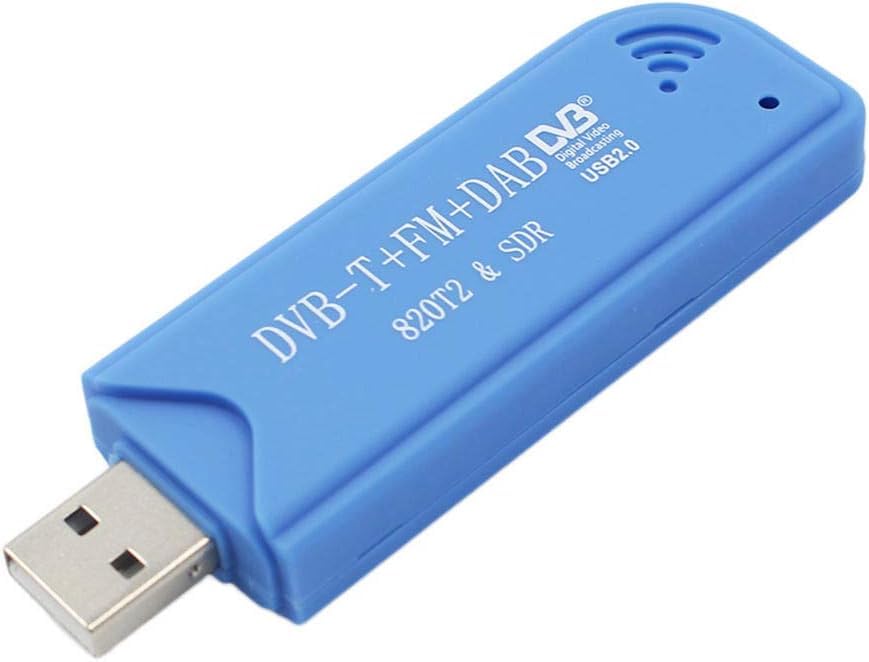
The real turning point for SDR hobbyists came when inexpensive RTL2832U TV tuner chipsets were discovered to be capable SDR receivers.
Originally, these USB devices were never intended to become hobbyist radio receivers. They were cheap television tuner dongles.
But experimenters realized the chipset could directly sample radio frequencies across a surprisingly large range of spectrum.
Suddenly, people could buy a tiny USB device for very little money and gain access to a massive amount of radio activity.
That changed everything.
Before RTL-SDR devices appeared, getting into wideband radio monitoring could become expensive very quickly. SDR dramatically lowered the barrier to entry.
Today, a beginner can spend less than the cost of a handheld ham radio and start exploring everything from local aircraft traffic to weather satellites orbiting overhead.
That accessibility created an enormous SDR community almost overnight.

The Waterfall Display Changes Everything
One of the biggest differences between SDR and traditional radios is the visual interface.
Traditional radios force you to tune blindly. You turn a dial, scan memory channels, or manually enter frequencies.
SDR works differently.
Most SDR software displays a live section of radio spectrum on screen. Signals become visible as peaks and streaks across a waterfall display.
This completely changes how you interact with radio.
After using SDR for a while, you begin recognizing signal patterns visually. Strong FM broadcast stations look different from digital bursts. Aircraft transmissions have their own appearance. Pager systems create distinct vertical lines. Digital modes produce recognizable structures across the waterfall.
You stop simply listening to radio and begin observing it.
For many people, this visual aspect alone becomes addictive.
What You Can Actually Listen To With SDR
One thing beginners often misunderstand is just how much activity exists across the radio spectrum.
Once you start exploring with SDR, you quickly realize there are signals everywhere.
Aircraft monitoring is usually where many people begin. Air traffic control communications are active nearly all day in populated areas, and listening to pilots coordinate with towers and approach controllers never really gets old. Even a basic SDR dongle with a decent antenna can receive aircraft many miles away.
ADS-B aircraft tracking is another major entry point into SDR. Aircraft constantly broadcast their location, altitude, speed, and identification data on 1090 MHz. With free software, your SDR can turn those transmissions into a live aircraft tracking map.
Then people discover weather satellites.
Receiving live NOAA weather satellite images directly from space with homemade antennas feels almost unbelievable the first time you do it. It is one of those projects that permanently changes how people view the hobby.
Shortwave listening opens another world entirely. Depending on conditions, you can hear broadcasters, amateur radio operators, military traffic, utility stations, maritime communications, and strange digital signals from thousands of miles away.
Eventually many SDR users drift toward ham radio because SDR naturally creates curiosity about antennas, propagation, digital modes, and transmission techniques.
SDR rarely remains a casual hobby for long.
It tends to pull people deeper into radio itself.
Why Antennas Matter More Than the SDR
They do. It’s not even up for debate.
The Limitations of Cheap SDR Dongles
Despite how impressive low-cost SDRs are, they do have limitations.
Cheap SDR dongles are more vulnerable to overload from strong local signals. In urban environments, nearby FM broadcast stations can create interference problems across other parts of the spectrum.
Dynamic range is another limitation. Weak signals sitting beside strong signals can become difficult for inexpensive SDRs to handle cleanly.
This is where higher-end SDR hardware begins separating itself from entry-level devices.
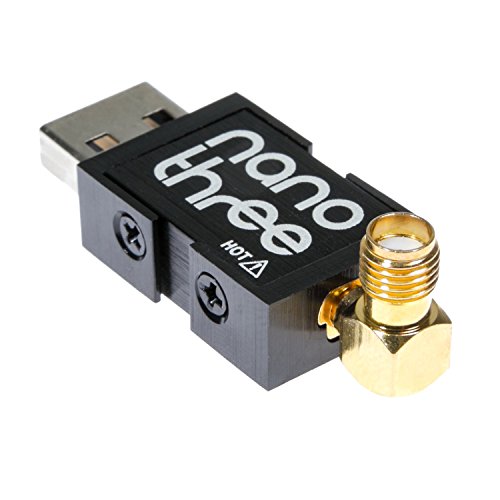
Receivers from companies like SDRplay, Airspy, and others generally provide:
- better filtering,
- improved sensitivity,
- lower noise floors,
- better dynamic range,
- and superior overall signal handling.
That said, beginners should not overthink this.
An RTL-SDR remains one of the best educational tools in the entire hobby. The value for money is honestly incredible.
SDR Software Is Half the Experience
The software ecosystem is one of SDR’s biggest strengths.
Programs like SDR#, SDR Console, CubicSDR, and GQRX transform the hardware into a complete radio analysis platform.
The software determines:
- how signals are displayed,
- how filters behave,
- what digital modes can be decoded,
- and how the user interacts with the spectrum.
Plugins and decoder applications expand things even further.
With the right software chain, SDR can decode:
- FT8,
- ACARS,
- ADS-B,
- AIS,
- POCSAG paging,
- weather satellite imagery,
- digital voice systems,
- and countless other signal types.
This modular software environment is one reason SDR evolves so quickly compared to traditional radios.
New capabilities appear constantly.
SDR Makes You Learn Radio Faster
One thing I genuinely appreciate about SDR is how educational it becomes. I’m serious.
Traditional radios often hide what is happening internally. SDR exposes it visually.
You begin understanding:
- bandwidth, <– This.
- signal spacing,
- modulation types,
- interference,
- harmonics,
- propagation,
- noise floors,
- filtering,
- and signal behavior naturally through experimentation.
You can literally see the effect of changing filters in real time.
You can observe interference.
You can compare antennas instantly.
You can watch propagation shift throughout the day.
SDR turns abstract radio theory into something visual and interactive.
That is why many experienced operators recommend SDR to beginners now.
It accelerates learning dramatically.
Common Beginner Frustrations
Most people hit a few frustrations early on.
Driver installation can sometimes be annoying, especially on Windows systems. Cheap USB cables and noisy power supplies can introduce interference. Indoor antennas usually perform worse than beginners expect.
Then there is the overwhelming amount of software.
At first, SDR software interfaces can feel intimidating because they expose so many controls:
- gain,
- bandwidth,
- sample rate,
- squelch,
- demodulation modes,
- FFT settings,
- filtering options,
- and waterfall adjustments.
But the learning curve becomes manageable surprisingly quickly once you begin experimenting.
The biggest breakthrough usually comes when people stop trying to understand everything at once and instead focus on one specific project.
Aircraft monitoring is often the best starting point because signals are strong, active, and easy to identify.
My Recommendation for Beginners
If someone asked me how to start with SDR today, I would keep it simple.
I would recommend:
- an RTL-SDR Blog V4,
- a decent outdoor antenna if possible,
- and SDR# or SDR Console software.
Then I would suggest focusing on one area first:
- aircraft,
- weather satellites,
- local ham repeaters,
- or FM DXing.
The people who enjoy SDR the most are usually the ones who approach it with curiosity instead of trying to master everything immediately.
Because SDR is enormous.
There is always another signal to investigate.
Another antenna to experiment with. Experimentation is what this hobby is about.
Another digital mode to decode.
Another band opening to chase.
That endless experimentation is what keeps people in the hobby for years.
My thinking
Software Defined Radio completely transformed modern radio monitoring.
It lowered costs, expanded accessibility, and gave ordinary hobbyists capabilities that once required professional equipment.
More importantly, SDR changed how people interact with radio itself.
You are no longer just tuning frequencies.
You are exploring the radio spectrum visually, dynamically, and interactively. It’s almost like VR.
For many people, SDR becomes the gateway into:
- ham radio,
- antenna experimentation,
- digital communications,
- RF engineering,
- signal analysis,
- and the broader world of radio technology.
Stuff You Can Do. Like, right now!
- ✈️ Listen to Aircraft, Ships, and Satellites
- 🌎 Hear Signals From Around the World
- 📡 Communicate Globally With Ham Radio
- 🚨 Monitor Emergency Communications
- 📶 Boost Your Signal With Better Antennas
Related Radio-Hobbyist Articles:


